
Clinic :Monday - Saturday: 6pm to 8pm
Fortis Hospital :Monday - Saturday: 10am to 4pm
Call Us: +91 9001861277
Clinic :Monday - Saturday: 6pm to 8pm
Fortis Hospital :Monday - Saturday: 10am to 4pm
Call Us: +91 9001861277
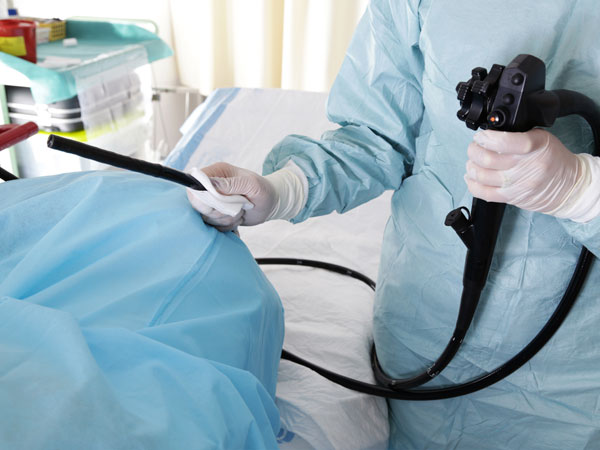
During an endoscopy, the doctor inserts a tool called an endoscope into a person’s body. Most endoscopes are thin tubes with a powerful light and tiny camera at the end.
There are several types of endoscopes. The length and flexibility of the endoscope depends on the part of the body the doctor needs to see. For example, an endoscope that helps a doctor examine the joints is often rigid. However, one used to view the inside of the colon is flexible.
Endoscopy is a procedure that allows a doctor to view the inside of a person's body. Originally, endoscopy was only used in the esophagus, stomach, and colon. Now, doctors use endoscopy to diagnose diseases of the ear, nose, throat, heart, urinary tract, joints, and abdomen.
Your doctor may recommend an endoscopy for various reasons:
To screen for and prevent cancer. For example, doctors use a type of endoscopy called a colonoscopy to screen for colorectal cancer. During a colonoscopy, your doctor may remove growths called polyps that could develop into cancer.
To diagnose a disease or find out the cause of symptoms. The type of endoscopy your doctor will recommend depends on the part of the body that needs to be examined.
To give treatment. These treatments include: